

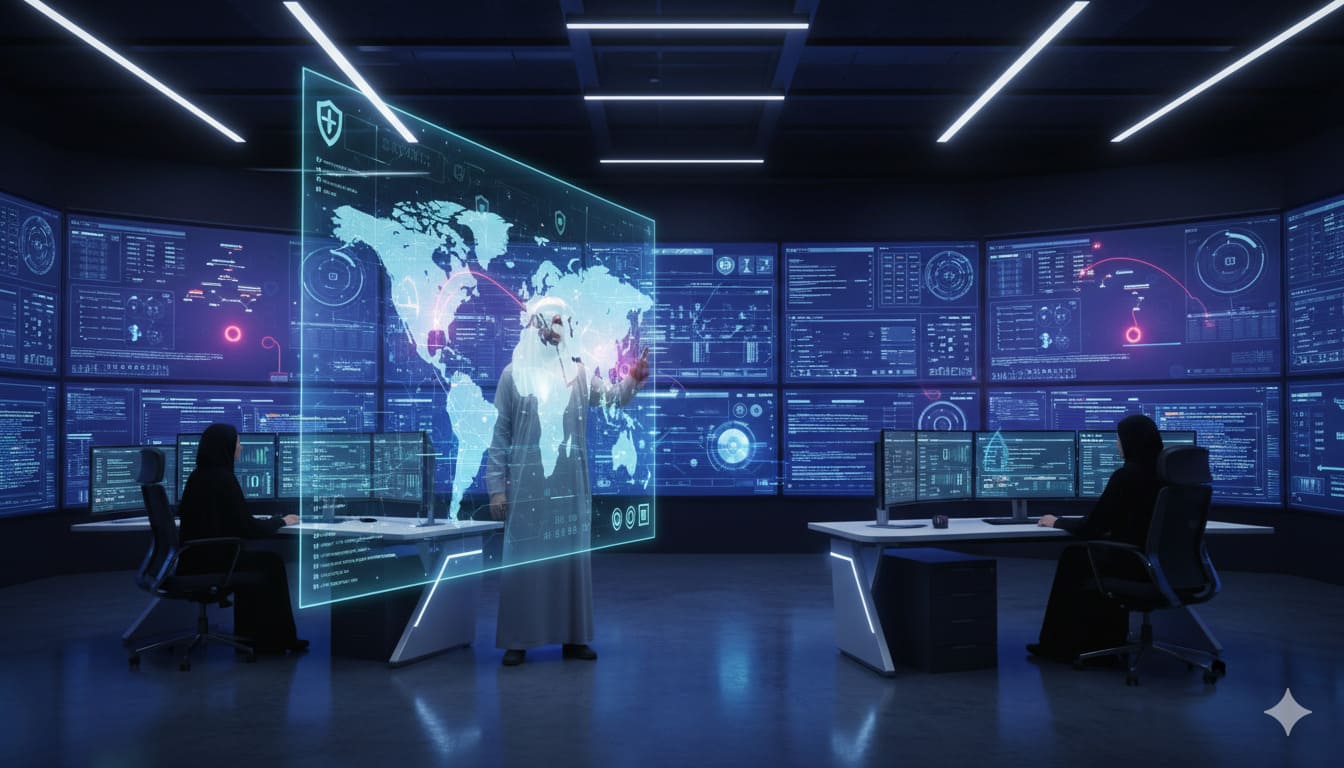
Cyber threats are no longer defined by isolated attacks or predictable patterns. They are continuous, adaptive, and increasingly designed to bypass traditional controls. As a result, cyber defense has shifted from preventing known threats to managing constant uncertainty.
In this environment, the effectiveness of security depends less on static tools and more on how quickly threats can be identified, understood, and contained. Artificial intelligence has become a critical factor in this shift, not as a replacement for cybersecurity foundations, but as a force that changes how defense systems operate at scale.
The Structural Weaknesses of Traditional Cyber Defense
Traditional cyber defense was built around known threats and static environments. It depends on predefined rules, signatures, and manual review, which limits its effectiveness against modern attacks.
Today’s threats evolve quickly and are designed to avoid obvious detection. This results in high alert volumes with limited context, making it difficult to identify real risk in time.
Common weaknesses include:
- Dependence on known indicators, leaving gaps against new threats
- High alert volumes that overwhelm security teams
- Slow, manual correlation across disconnected tools
- Limited context for distinguishing real risk from normal behavior
As environments grow more distributed, these weaknesses increase exposure and slow response. Traditional models struggle to keep pace with the speed and complexity of modern threats.
How AI Transforms Threat Detection
AI changes threat detection by shifting the focus from identifying known threats to recognizing abnormal behavior. Instead of relying on predefined signatures or static rules, AI-driven systems analyze patterns across users, devices, and network activity to establish what “normal” looks like.
When behavior deviates from that baseline, AI can flag potential threats even if no known indicator exists. This allows security teams to detect attacks that would otherwise pass through traditional defenses, including zero-day exploits, insider threats, and low-and-slow attack techniques.
Another critical impact of AI is context. Rather than treating each event in isolation, AI correlates activity across multiple sources to assess risk more accurately. This reduces false positives and helps security teams focus on events that truly require attention.
AI in Security Operations and Continuous Monitoring
Security operations generate vast amounts of data, far more than human teams can realistically analyze in real time. Logs, alerts, and events flow continuously from networks, endpoints, applications, and cloud environments.
AI helps security operations move from constant reaction to continuous awareness. By processing large volumes of data in parallel, AI-driven systems identify patterns, correlate related events, and surface activity that indicates elevated risk.
In practice, AI supports security operations by:
- Correlating events across multiple systems instead of isolated tools
- Prioritizing alerts based on behavior, context, and potential impact
- Reducing noise so analysts focus on meaningful security incidents
- Maintaining consistent monitoring without fatigue or gaps
Rather than replacing security teams, AI changes how they operate. Analysts spend less time filtering alerts and more time investigating high-risk activity and improving defenses.
Accelerating Incident Response with AI
When a security incident occurs, speed is critical. Delays in investigation or containment increase the impact of an attack and the cost of recovery.
AI accelerates incident response by providing immediate context around suspicious activity. Instead of starting investigations from scratch, security teams receive prioritized alerts with supporting data, reducing time to decision.
Key response improvements include:
- Faster identification of affected systems and users
- Early containment recommendations based on observed behavior
- Reduced manual analysis during high-pressure incidents
By shortening the time between detection and action, AI helps organizations limit damage and maintain operational continuity during active threats.
AI in Securing Complex and Regulated Environments
Organizations operating in regulated and high-risk environments face added pressure to protect sensitive data while maintaining operational stability. Security failures in these contexts carry regulatory, financial, and reputational consequences.
AI supports these environments by improving visibility across complex infrastructures and identifying risky behavior that traditional controls may miss. It helps security teams monitor activity consistently across users, systems, and data flows, even as environments expand.
For sectors such as healthcare and large enterprises, AI-driven security enhances oversight without adding operational burden. It strengthens detection and response while supporting governance and compliance requirements through better context and traceability.
The Practical Limits of AI in Cyber Defense
AI strengthens cyber defense, but it does not eliminate risk or replace human judgment. Its effectiveness depends on the quality of data, proper configuration, and clear operational oversight.
AI systems can surface patterns and anomalies, but they do not understand business context on their own. Without governance, they may misinterpret behavior, inherit bias from data, or miss threats that fall outside observed patterns.
For this reason, AI works best as a decision-support capability, not an autonomous control. Human expertise remains essential for validation, response decisions, and strategic oversight.
Embedding AI into Enterprise Security Operations
Embedding AI into security operations requires alignment with existing processes. AI delivers value when it is integrated into how monitoring, investigation, and response already function.
Rather than operating in isolation, AI should enhance visibility across security layers and support decision-making at key points in the workflow.
Successful integration depends on clear ownership, defined escalation paths, and continuous tuning. When AI is operationalized correctly, it strengthens security operations without increasing complexity, allowing teams to scale protection as environments and threats evolve.
Megamind and AI-Driven Cyber Defense Operations
Megamind applies AI across cyber defense environments to improve threat detection, assessment, and containment. Intelligence is introduced where it supports visibility and prioritization, rather than as an isolated capability.
AI-driven analysis is aligned with existing network, endpoint, and monitoring controls to help security teams focus on meaningful risk. By correlating activity across systems, AI enables faster investigation and more confident decision-making without disrupting established workflows.
This operational approach allows organizations to strengthen cyber defense while maintaining consistency, control, and scalability across complex and regulated environments.
Enabling Smarter, Adaptive Cyber Defense Capabilities
Modern cyber defense is no longer defined by static controls or isolated tools. It depends on how effectively intelligence is applied across detection, operations, and response as threats continue to evolve.
AI enables this shift by improving how security teams interpret activity, prioritize risk, and respond under pressure. When integrated thoughtfully, it strengthens decision-making and resilience without adding operational complexity.
Megamind helps organizations apply AI where it delivers measurable impact within cyber defense operations, aligning intelligence with infrastructure, risk exposure, and regulatory requirements. The result is a defense model that adapts as environments grow and threats change.
Partner with Megamind to elevate cyber defense through intelligence-driven security.