

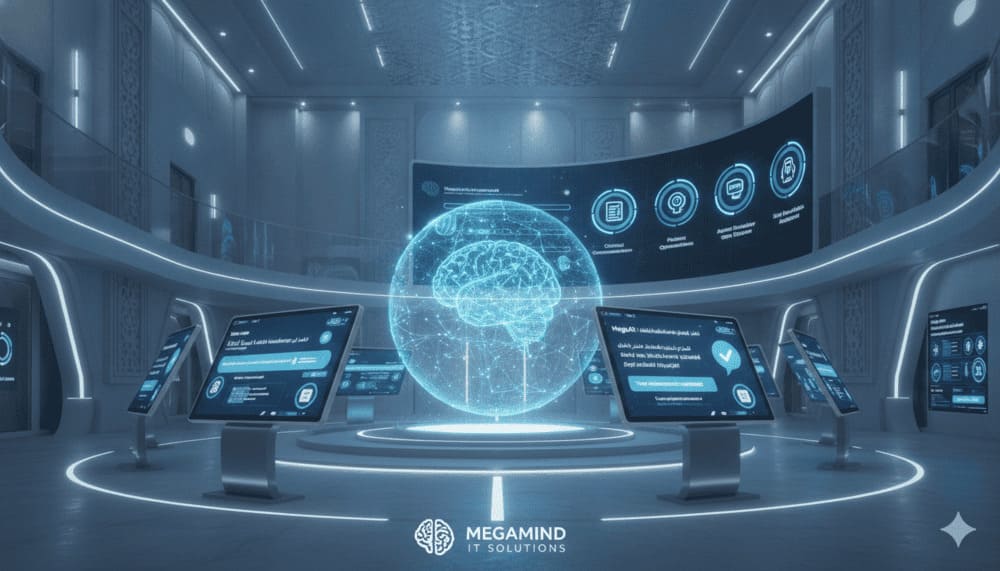
For years, healthcare technology has focused on collecting information. Hospitals implemented electronic health records, integrated systems, and analytics platforms to make data more available across the organization.
Generative AI introduces a different concept. Instead of asking healthcare professionals to adapt to technology, it allows technology to interact more naturally with people. Clinicians can ask questions, administrators can request summaries, and patients can receive personalized responses through conversational interactions.
This shift from information management to information interaction is what positions Generative AI as a transformative force in healthcare. For Saudi hospitals, the opportunity extends beyond adopting another digital tool. It is about making clinical knowledge, operational insights, and patient interactions more accessible across the organization.
Beyond ChatGPT: What Generative AI Means for Hospitals
For many people, Generative AI is synonymous with tools like ChatGPT. While conversational AI has helped bring the technology into the mainstream, its potential in healthcare extends far beyond generating text or answering questions.
At its core, Generative AI enables systems to understand information, generate responses, summarize content, and interact with users in a more natural way. In a hospital environment, this can support everything from clinical documentation and patient communication to faster access to information across the organization.
The real opportunity for hospitals is not simply deploying another chatbot. It is using Generative AI to make knowledge, insights, and expertise more accessible within clinical and operational workflows, enabling healthcare professionals to spend less time searching for information and more time acting on it.
Five Hospital Functions Ready for Generative AI
- Clinical Documentation
Generative AI can help streamline documentation workflows by generating summaries, organizing clinical notes, and reducing administrative burdens, allowing clinicians to spend more time focused on patient care.
- Patient Communication
From appointment inquiries to follow-up guidance, Generative AI can support patient engagement through intelligent virtual assistants that provide timely and personalized responses.
- Administrative Operations
Generative AI can assist with repetitive administrative tasks, helping hospitals improve efficiency, reduce manual workloads, and accelerate routine processes.
- Clinical Decision Support
By summarizing information and surfacing relevant insights, Generative AI can help healthcare professionals access critical information more quickly and support informed decision-making.
- Staff Knowledge Assistance
Generative AI can help staff navigate policies, procedures, and organizational knowledge, making information easier to access across the hospital.
Key Considerations for Generative AI Adoption
As hospitals explore the potential of Generative AI, successful adoption requires more than implementing new technology. To maximize value while minimizing risk, healthcare organizations should focus on several key considerations:
- Data Privacy and Security: AI solutions must protect sensitive patient information and align with healthcare data security requirements.
- Governance and Accountability: Clear policies are needed to ensure the responsible use of AI and maintain confidence in AI-generated outputs.
- System Integration: Generative AI delivers the greatest value when integrated with existing healthcare systems and workflows rather than operating as a standalone tool.
- Human Oversight: While AI can support efficiency and decision-making, healthcare professionals remain essential for validation, clinical judgment, and patient care.
How MegaAI Enables Generative AI in Healthcare
As healthcare providers move from exploring Generative AI to implementing it within clinical and operational environments, choosing solutions built around healthcare workflows becomes increasingly important.
Developed by Megamind IT Solutions, MegaAI helps hospitals translate AI capabilities into practical applications that support both patient care and operational excellence.
Key capabilities include:
- AI Chatbots and Voice Assistants that enhance patient engagement and improve access to information.
- AI-Powered Symptom Assessment that supports faster and more informed interactions.
- Intelligent Automation that reduces manual workloads and streamlines routine processes.
- Advanced Clinical Support Solutions that help healthcare teams make more informed decisions.
By combining healthcare expertise with AI innovation, Megamind enables hospitals to adopt Generative AI in a secure, scalable, and healthcare-focused way.
Turning Generative AI from Potential into Practical Impact
Generative AI is rapidly moving from an emerging technology to a practical tool that can support clinical, operational, and patient-facing functions across healthcare organizations. For Saudi hospitals, the opportunity lies not simply in adopting AI, but in identifying where it can create meaningful improvements in efficiency, decision-making, and patient experiences.
Through MegaAI, Megamind helps healthcare organizations bridge the gap between AI potential and real-world impact. By combining healthcare expertise with innovative AI capabilities, Megamind empowers hospitals to build more intelligent, efficient, and patient-centered healthcare environments.
Partner with Megamind to bring Generative AI into your healthcare ecosystem and unlock measurable value across clinical, operational, and patient engagement workflows.
Read More
- Predictive Analytics in Saudi Hospitals: Using Data to Save Lives
- How MegaCare Helps Saudi Hospitals Achieve JCI Accreditation
- How to Calculate ROI on Healthcare IT Investments in Saudi Arabia
- Building a Healthcare Data Warehouse for Saudi Hospitals
- Cybersecurity Frameworks for Saudi Healthcare: SAMA, NCA and PDPL Compliance