
Every minute can make a difference in healthcare. The ability to recognize a deteriorating patient before a crisis occurs, identify individuals at higher risk of complications, or anticipate surges in demand can significantly impact both patient outcomes and hospital performance.
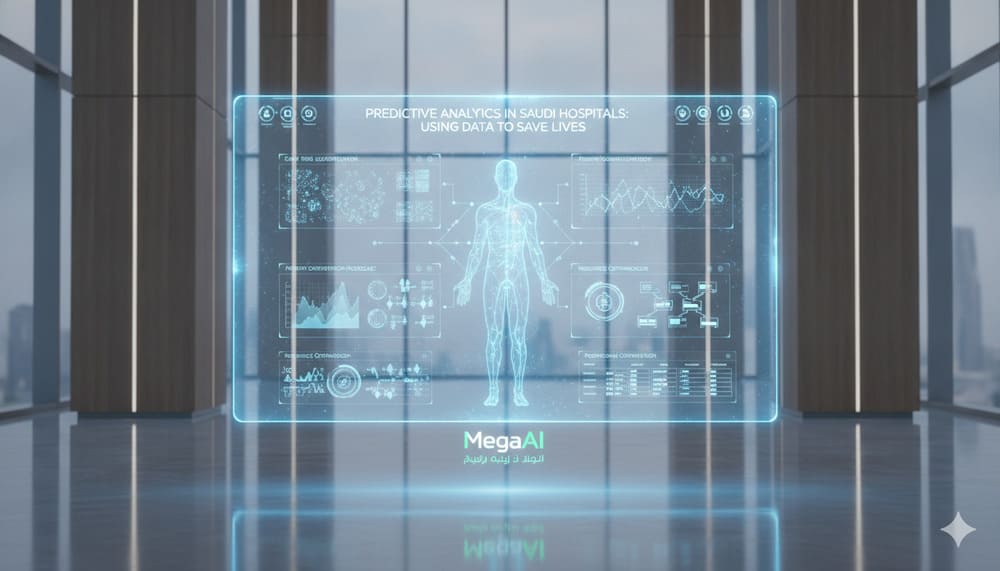
This is where predictive analytics is transforming healthcare delivery. By analyzing historical and real-time data, predictive models help hospitals identify patterns, forecast potential risks, and support earlier interventions. For Saudi hospitals advancing their digital transformation efforts, predictive analytics is becoming an essential capability for delivering more proactive, data-driven care.
Why Predictive Analytics Matters for Saudi Hospitals
As Saudi hospitals continue their digital transformation journeys, the ability to anticipate future events is becoming just as important as understanding past performance. Healthcare organizations now have access to vast amounts of clinical, operational, and financial data, creating new opportunities to improve decision-making and patient care.
Traditional reporting helps hospitals understand what has already happened. Predictive analytics goes a step further by identifying patterns in historical and real-time data to forecast potential outcomes, risks, and trends. This enables healthcare providers to take proactive action before challenges escalate.
By helping healthcare organizations move from reactive to proactive decision-making, predictive analytics is becoming an increasingly important capability for improving both clinical and operational performance.
How Predictive Analytics Helps Save Lives
One of the most valuable applications of predictive analytics in healthcare is its ability to identify potential risks before they escalate into serious medical events. By analyzing large volumes of patient data, predictive models help healthcare providers recognize warning signs earlier and intervene sooner.
Early Identification of High-Risk Patients
By analyzing patient histories, vital signs, laboratory results, and other clinical information, predictive analytics helps care teams identify patients who may require additional monitoring or intervention before complications arise. This enables healthcare providers to prioritize care and respond proactively to potential risks.
Predicting Patient Deterioration
In critical care environments, even subtle changes in patient data can signal worsening conditions. Predictive models help healthcare providers recognize these warning signs earlier, enabling faster clinical responses and supporting more timely interventions.
Supporting Chronic Disease Management
Patients with chronic conditions often require continuous monitoring and personalized care. Predictive analytics supports these efforts by helping healthcare organizations anticipate potential complications and adjust care plans accordingly, improving long-term disease management.
Reducing Hospital Readmissions
By identifying patients who may be at greater risk of returning after discharge, predictive analytics enables hospitals to implement targeted follow-up strategies that improve long-term outcomes, continuity of care, and patient satisfaction.
Operational Benefits of Predictive Analytics
In addition to improving patient care, predictive analytics helps hospitals operate more efficiently by enabling:
- Smarter Resource Allocation: Forecasting patient volumes and optimizing bed utilization to support more effective capacity planning.
- Workforce Optimization: Anticipating staffing requirements and improving scheduling efficiency based on expected demand.
- Population Health Management: Identifying trends across patient populations to support preventive care initiatives and long-term healthcare planning.
How MegaAI Helps Hospitals Turn Data into Action
The ability to predict future outcomes depends on more than access to data. Hospitals also need intelligent tools that can transform information into actionable insights. Developed by Megamind, MegaAI helps healthcare organizations bridge this gap through AI-powered analytics and predictive intelligence.
- AI-Powered Analytics: Converting healthcare data into meaningful insights that support informed decision-making.
- Intelligent Clinical Support: Leveraging AI-driven tools to support faster assessments, diagnostics, and patient care decisions.
- Predictive Insights and Population Health Intelligence: Helping organizations identify emerging trends, anticipate risks, and gain deeper visibility into population health patterns.
- Operational Optimization: Supporting greater efficiency through enhanced analytics, automation, and performance monitoring.
By transforming healthcare data into actionable intelligence, MegaAI helps hospitals move beyond traditional reporting and unlock greater value from their data assets.
Transforming Data into Life-Saving Insights
For Saudi hospitals, predictive analytics is no longer simply an emerging technology. It is becoming a strategic capability that helps healthcare organizations improve patient outcomes, strengthen operational performance, and support future innovation.
By combining a strong data foundation with AI-powered capabilities, hospitals can transform information into strategic intelligence that supports better decisions and more effective care delivery. Through MegaAI, Megamind helps healthcare organizations turn healthcare data into life-saving insights that drive measurable value across the organization.
Connect with Megamind to build a stronger data foundation and unlock the insights that drive better decisions, improved performance, and better healthcare outcomes.
Read More
- Predictive Analytics in Saudi Hospitals: Using Data to Save Lives
- How MegaCare Helps Saudi Hospitals Achieve JCI Accreditation
- How to Calculate ROI on Healthcare IT Investments in Saudi Arabia
- Building a Healthcare Data Warehouse for Saudi Hospitals
- Cybersecurity Frameworks for Saudi Healthcare: SAMA, NCA and PDPL Compliance