

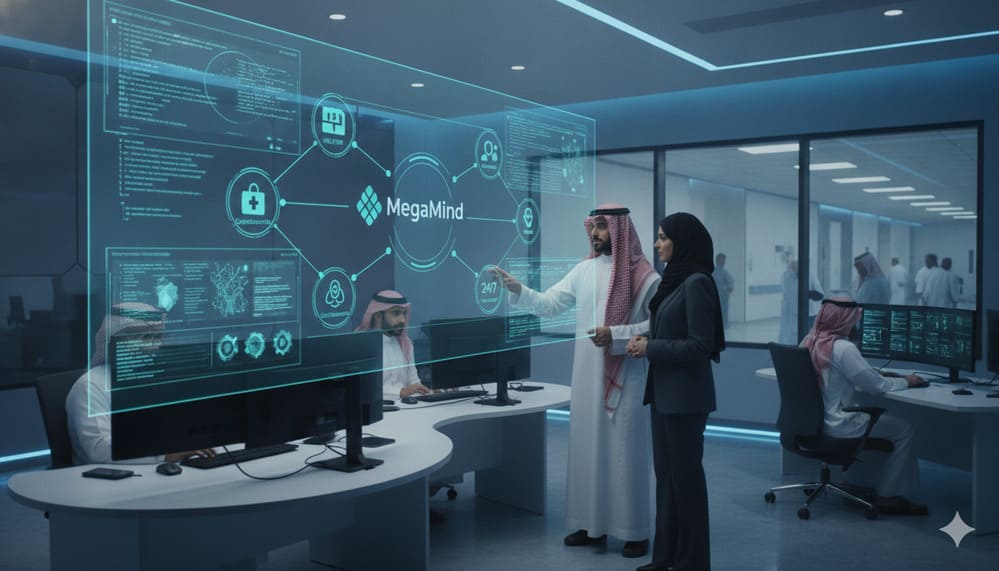
Managing hospital IT infrastructure has become far more demanding than maintaining systems and resolving technical issues. Saudi healthcare providers are now expected to support secure operations, protect sensitive patient data, maintain system availability, and scale digital services without disruption.
As operational complexity continues to grow, many hospitals are turning to managed IT services to reduce internal pressure, strengthen cybersecurity, improve efficiency, and gain access to specialized healthcare IT expertise. Instead of stretching internal teams across multiple responsibilities, managed services allow hospitals to build a more scalable and resilient operational environment.
Key IT Services Hospitals Commonly Outsource
Hospitals often outsource IT functions that require specialized expertise, continuous monitoring, or high operational reliability. This helps healthcare providers maintain secure and efficient operations while reducing pressure on internal teams.
Commonly outsourced services include:
- Infrastructure and network management.
- Cybersecurity and threat monitoring.
- Cloud and data center support.
- HIS and EHR system support.
- Technical help desk services.
- System integration and performance monitoring.
- Backup, disaster recovery, and business continuity support.
By outsourcing these functions, hospitals can improve operational efficiency, strengthen security, and support long-term scalability more effectively.
When Should a Hospital Consider Managed Services?
Many hospitals begin considering managed IT services when operational demands start exceeding the capabilities of internal teams. As healthcare environments become more digitally connected, maintaining secure, stable, and scalable IT operations internally can become increasingly difficult.
Hospitals may benefit from managed services when they experience:
- Frequent system downtime or performance issues.
- Growing cybersecurity and compliance concerns.
- Expansion across multiple facilities or locations.
- Limited internal IT resources or specialized expertise.
- Challenges managing complex healthcare systems and integrations.
- Increasing operational costs without improved efficiency.
- The need for continuous monitoring and 24/7 technical support.
At this stage, managed services become less about outsourcing individual tasks and more about building a stronger operational foundation that supports long-term healthcare performance.
Benefits of IT Outsourcing for Saudi Hospitals
For many Saudi hospitals, managed IT services have become a strategic way to improve operational performance, strengthen security, and support long-term digital growth without placing additional pressure on internal teams.
Key benefits include:
- Access to specialized healthcare IT expertise without the cost and complexity of continuously expanding internal teams.
- Improved operational efficiency through proactive monitoring, faster issue resolution, and reduced system downtime.
- Stronger cybersecurity and compliance support to help protect sensitive patient data and maintain secure healthcare operations.
- Better scalability for hospitals managing multiple facilities, growing patient volumes, or expanding digital healthcare services.
- Reduced operational and infrastructure burden by outsourcing resource-intensive IT functions to dedicated specialists.
- More reliable system performance across clinical, administrative, and operational environments.
- Enhanced business continuity and disaster recovery readiness to minimize disruption during technical failures or security incidents.
- Greater internal focus on patient care and strategic priorities instead of day-to-day IT management challenges.
By outsourcing critical IT functions strategically, hospitals can build a more stable, secure, and scalable healthcare environment that better supports long-term operational goals.
Risks of Managing Hospital IT Entirely In-House
While internal IT teams remain essential to hospital operations, managing every aspect of healthcare IT internally can create significant operational pressure as systems become more complex and security demands continue to increase.
Some of the most common challenges include:
- Limited access to specialized healthcare IT expertise.
- Difficulty maintaining continuous monitoring and 24/7 support.
- Increased risk of downtime, security gaps, or delayed issue resolution.
- Growing cybersecurity and compliance pressures.
- Higher operational costs tied to infrastructure, staffing, and maintenance.
- Challenges scaling IT operations across multiple facilities.
- Slower adoption of new technologies and digital transformation initiatives.
- Increased workload on internal teams, leading to reduced operational efficiency.
Without the right operational support structure, hospitals may struggle to maintain the level of performance, security, and scalability required in modern healthcare environments.
What to Look for in a Healthcare Managed Services Provider
Choosing the right managed services partner is critical for maintaining secure, stable, and efficient healthcare operations. Beyond technical capabilities, hospitals should look for providers that understand the operational and regulatory demands of the healthcare sector.
Key factors to evaluate include:
- Experience supporting hospitals and healthcare organizations.
- Strong cybersecurity and compliance capabilities.
- Ability to support HIS, EHR, and healthcare system integrations.
- Scalable infrastructure and multi-facility support.
- 24/7 monitoring and technical support availability.
- Proven operational reliability and response times.
- Flexibility to adapt services based on organizational needs.
- Clear communication, reporting, and service transparency.
A healthcare-focused outsourcing partner should not only resolve technical issues but also help hospitals build a more resilient and future-ready operational environment.
How Megamind Supports Saudi Hospitals Through MegaSource
Through MegaSource, Megamind helps Saudi hospitals manage critical IT operations through healthcare-focused managed services designed to improve stability, security, and operational efficiency.
MegaSource supports healthcare providers with:
- Infrastructure and network management.
- Cybersecurity and continuous threat monitoring.
- Cloud and data center support.
- HIS, EHR, and system integration support.
- 24/7 technical monitoring and operational support.
- Backup, disaster recovery, and business continuity solutions.
- Operational reporting and performance monitoring.
By combining specialized healthcare IT expertise with scalable managed services, MegaSource helps hospitals reduce operational strain, strengthen digital infrastructure, and support long-term healthcare growth more effectively.
Build a More Scalable and Secure Hospital IT Environment
Strengthen your hospital’s operational foundation with managed IT services designed to support performance, security, and long-term healthcare growth. As digital healthcare environments continue to evolve, having the right operational support model becomes essential for maintaining efficiency, reducing risk, and supporting uninterrupted care delivery.
Through MegaSource, Megamind helps healthcare providers across Saudi Arabia build more resilient IT environments with scalable managed services tailored to the demands of modern healthcare operations.
Partner with Megamind and empower your hospital with managed IT services built to support secure operations, scalable infrastructure, and long-term healthcare performance.
Read More
- Predictive Analytics in Saudi Hospitals: Using Data to Save Lives
- How MegaCare Helps Saudi Hospitals Achieve JCI Accreditation
- How to Calculate ROI on Healthcare IT Investments in Saudi Arabia
- Building a Healthcare Data Warehouse for Saudi Hospitals
- Cybersecurity Frameworks for Saudi Healthcare: SAMA, NCA and PDPL Compliance