

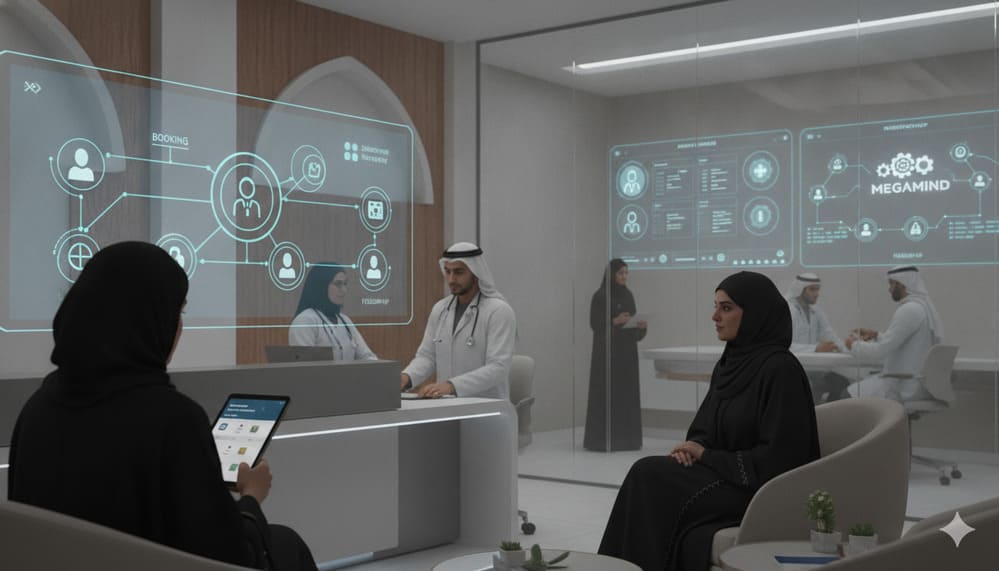
Most Saudi clinics don’t struggle to attract patients. They struggle to keep them.
Patients visit once, then don’t return. Follow-ups are missed, treatment plans drop off, and schedules lose consistency. Growth becomes unpredictable.
In a market where expectations are higher and competition is more structured, retention is no longer secondary. It is what drives stable revenue and long-term performance.
The issue is not service quality alone. It is how the patient journey is managed across booking, visits, and follow-up.
This is where CRM shifts from a tool to a system that keeps patients engaged, returning, and continuing care.
Why Patients Don’t Return to Clinics
Patient drop-off happens after the visit, not during it.
The next step may be discussed, but it is not consistently captured, scheduled, or followed through. What should continue as a care journey ends as a one-time visit.
In many Saudi clinics, retention is not managed as a system. It depends on manual effort, inconsistent communication, and patient initiative.
When continuity is not structured, patients don’t return consistently.
Mapping the Patient Journey: Where Retention Is Won or Lost
Patient retention is decided across three points. Each one either secures the next visit or loses it.
- Booking: Retention starts here
If booking is delayed, unclear, or requires effort, patients postpone or don’t commit at all.
No confirmed appointment means no guaranteed return.
- During the Visit: Retention is defined
The doctor sets the next step, but if it is not scheduled before the patient leaves, it remains intention, not action.
This is where many clinics lose future visits without realizing it.
- After the Visit: Retention is maintained or lost
If there is no follow-up, no reminder, and no communication, the patient is left to decide when or if to return.
At this point, most drop-off happens.
Reducing No-Shows and Increasing Repeat Visits
If the next visit is not booked before the patient leaves, it depends on the patient to return. Most don’t.
Improving attendance and repeat visits depends on how three actions are handled consistently:
- Confirm the appointment before the patient leaves
- Send timely reminders tied to the appointment
- Allow quick rescheduling without friction
When these are executed consistently, no-shows decrease and repeat visits become more predictable.
CRM Features That Directly Improve Patient Retention
Retention improves when every patient has a clear, tracked next step, and the system ensures it is executed.
In practice, this depends on a set of connected capabilities:
- Unified patient view: All interactions, history, and next steps are captured in one profile, giving teams full visibility across the patient journey.
- Automated reminders and follow-ups: Appointments and post-visit actions are triggered automatically based on patient activity, not manual input.
- Structured follow-up workflows: Missed appointments and required follow-ups are flagged and re-engaged through defined workflows.
- Patient segmentation and targeted communication: Communication is tailored based on patient condition, history, or behavior to improve engagement.
- Integration with clinical and operational systems: CRM connects with HIS, scheduling, and other systems to ensure data and actions stay aligned.
When these capabilities work together, retention becomes part of the clinic’s workflow rather than dependent on manual effort or patient initiative.
Connecting CRM with Clinical and Operational Systems
CRM improves retention only when it is connected to the systems used across the clinic.
Megamind integrates CRM with clinical and operational systems, aligning patient data, scheduling, and communication into one flow.
- Clinical systems (HIS / EHR): Ensure follow-ups are based on accurate patient history and treatment plans.
- Scheduling systems: Manage appointments and availability in real time.
- Billing and operational systems: Keep administrative and financial data aligned with the patient journey.
When these systems are connected, follow-ups are accurate, communication is consistent, and no step depends on manual coordination.
How Megamind Enables Patient Retention at Scale
Megamind structures patient retention by ensuring every interaction leads to a clear, tracked next step.
Patient data is centralized into a unified profile, giving teams full visibility on history, status, and follow-ups. Based on this, workflows are defined so that:
- Follow-ups are linked to consultations and treatment plans
- Reminders are triggered automatically based on appointments
- Communication is consistent across channels
CRM is integrated with clinical and operational systems, ensuring scheduling, patient data, and communication work as one flow.
Beyond implementation, Megamind continuously tracks engagement, identifies drop-offs, and refines workflows to improve retention over time.
Megamind turns retention into a structured, system-driven process, not a manual effort
Build a Retention System, Not Just a CRM Setup
Stop relying on disconnected tools and manual follow-ups to manage patient retention.
Retention improves when the patient journey is structured, every next step is defined, and communication is executed consistently. Without this, even the best systems fail to deliver results.
Megamind helps healthcare providers move beyond basic CRM implementation by designing and integrating a complete patient engagement system. From capturing patient data to automating follow-ups and aligning workflows, every part of the journey is connected and managed.
This approach ensures that patient return, continuity of care, and operational performance are not left to chance.
Connect with Megamind to implement a CRM system that improves patient retention and drives measurable growth.
Read More
- Predictive Analytics in Saudi Hospitals: Using Data to Save Lives
- How MegaCare Helps Saudi Hospitals Achieve JCI Accreditation
- How to Calculate ROI on Healthcare IT Investments in Saudi Arabia
- Building a Healthcare Data Warehouse for Saudi Hospitals
- Cybersecurity Frameworks for Saudi Healthcare: SAMA, NCA and PDPL Compliance